 RSS Feed
Chicago (IL) – The Blu-ray camp has responded to the rather dramatic HD DVD player price cut from last week this weekend: If you purchase certain LCD TV models, Sony and Sharp are throwing in a “free” Blu-ray player.
Price has not been one of the advantages of Blu-ray players so far, but it appears that Sony & Co are beginning to take first shots at Toshiba on this battlefield as well. The ad package in your Sunday newspaper brought two especially interesting flyers – one from Sony and one from Best Buy.
Sony is offering a $400 rebate on the purchase of a LCD TV/Blu-ray player package, which essentially gets you the BDP-S300 for free (we’ll forget the sales tax here). Qualifying TVs are the 46” KDL-46V3000, the 46” KDL-46W3000 and the 52” KDL-52W3000, which carry MSRPs of $2300, $2500 and $3000, respectively. The instant rebate can be used for all of Sony’s current Blu-ray players (excluding the Playstation 3) and is apparently available through all retailers that offer these products.
BestBuy not only advertises this Sony program, but also a similar and time-limited promotion for Sharp TVs and Blu-ray players. Purchasing an Aquos D64-series LCD TV (for prices between $1700 and $3000) allows customers to bag a Sharp BD-HP20U Blu-ray player free of charge. The player usually retails for $500.
Of course, if you own an HDTV and simply want a cheap high-def player, the Toshiba HD DVD units are still the most attractive devices. But you’ll have to be careful what and where you buy: For example, Best Buy offers the entry-level HD-A3 (whose MSRP was dropped to $150 by Toshiba last week) for $300. Most online shops are currently selling this player for about $125.
The Blu-ray promotion includes five free movies; the HD-A3 HD DVD player includes seven or nine free movies, depending on the retailer.
Sony,Sharp : Offer free blu-ray players
 Monday, January 21, 2008 |
"Google.org" - Another first by google
|
Google's philanthropic arm has announced $25 million in new grants and investment to help "make the world a better place." The computer search engine is focusing on projects that include disease and disaster prevention, helping small and medium-sized enterprises, improving the flow of information to hold governments accountable, and developing renewable energy sources. VOA Correspondent Cindy Saine reports from Washington.
The co-founders of Google (Sergey Brin and Larry Page) launched their unconventional business ten years ago under the motto "Don't Be Evil." In 2006, Google hired Larry Brilliant as executive director of its in-house philanthropy, known as Google DotOrg. Brilliant is an American physician who moved to India in the 1970's and played a major role in eradicating smallpox in the country. One of the five new grants goes to a project to use information technology to predict and prevent ecological disasters and the outbreak of disease. Brilliant says diseases that jump from animals to humans are a real threat.
"We've pushed all the limits, we've cut down the rain forests, we've moved into the territory of animals, and these diseases which have always been there in the animal population are now jumping to human beings," he said.
Brilliant says there are more than 35 major diseases which have jumped species, including SARS and bird flu, and that an early warning system would make a huge difference.
"There are now 50 million people living with HIV-AIDS," he added. "Had we been fortunate and been in that African jungle when that virus jumped from a chimpanzee to a human being, and had we been able to stop the disease, nip it in the bud, so to speak, then, look at the tragedy, human tragedy that could have been averted."
The grant seeks to strengthen disease surveillance systems in the Mekong Basin, stretching from Vietnam and Burma to southwestern China.
Aid from Google.org is different from other corporate giving because it allows investment in for-profit companies. Google also encourages its employees to participate directly in philanthropic projects on company time, and to lobby public officials for changes in policy. The foundation has pledged $10 million to eSolar, a California-based company that has developed a solar generator to replace traditional power plants. A number of the new grants are going to India, to improve urban and education planning there.
Google's new grants have generated both enthusiasm and criticism. Siva Vaidhyanathan is an associate professor of media studies and law at the University of Virginia. He welcomes Google's commitment but questions its approach.
"Google's approach to every problem is technocratic," he said. "It is that they can impose a machine, or invent a machine, or invent a piece of software that can solve a major, complicated challenge, and that given enough bombast, people will converge on this machine as the answer to a problem. And I think that is a mistake."
Larry Brilliant admits that Google's philanthropic efforts are an "experiment", and says we will all just have to watch and see if they work.
Visit Google.org
Source: www.voanews.com
 0
comments
0
comments
 Labels:
Google
Labels:
Google
Microsoft reveals hole in Excel
Sunday, January 20, 2008 |
Microsoft has revealed that hackers have found a way to infiltrate older versions of its Excel program to take control of infected computer systems.
Earlier in the week, the software major said it's investigating reports of such attacks though hasn't yet determined whether it will go ahead and patch the bug, and if so, when.
Q) How will it infiltrate the anti-virus cordon and how can you protect your PC from it ?
Ans) The modus operandi is: you may either get a specially crafted Excel file as an email attachment or may end up visiting a compromised Web site -- either ways, you could be inviting hackers to arbitrarily take control of your PCs for furthering their malicious cause, be it stealing passwords and other personal information or sending out spam.
Microsoft Office Excel 2003 Service Pack 2, Excel Viewer 2003, Excel 2002, Excel 2000, and Excel 2004 for Mac, are all vulnerable to this form of attack, Microsoft said.
The way to go for users, as advised by Redmond, is to use a tool named 'Microsoft Office Isolated Conversion Environment', which scans files for bad code before opening them.
Meanwhile, more recent versions of Excel such as Excel 2007, Excel 2007 SP 1, and Excel 2008 for Mac are believed not to be vulnerable.
0
comments
Labels:
Excel,
Hackers,
Hacking,
microsoft,
Software,
Technology,
Virus
Unethical Hacking: Hackers cut cities power
Saturday, January 19, 2008 |
Cyber-security experts have long warned of the vulnerability of critical infrastructure like power, transportation and water systems to malicious hackers. Friday, those warnings quietly became a reality: Tom Donahue, a CIA official, revealed at the SANS security trade conference in New Orleans that hackers have penetrated power systems in several regions outside the U.S., and "in at least one case, caused a power outage affecting multiple cities."
"We do not know who executed these attacks or why, but all involved intrusions through the Internet," Donahue said in a statement. "We suspect, but cannot confirm, that some of these attackers had the benefit of inside knowledge."
Other details were murky: Donahue didn't say when or where the cyber attacks had occurred, or how many people had been affected. He also glossed over what element of the systems had been exploited.
In recent months, security researchers have emphasized long-standing security vulnerabilities in the Supervisory Control and Data Acquisition (SCADA) systems that control U.S. critical infrastructure systems ranging from power plants to dams to public transit (See " America's Hackable Backbone").
At the DefCon hacker conference in August, researcher Ganesh Devarajan of the security firm Tipping Point gave a presentation showing techniques that hackers can use to find points in SCADA systems that are vulnerable to hijacking and sabotage. The next month, the Associated Press obtained a U.S. Department of Homeland Security video, known as the "Aurora Generator Test," demonstrating how a cyber-intrusion could be used to physically destroy a large power generator.
In the past two years, hackers have in fact successfully penetrated and extorted multiple utility companies that use SCADA systems, says Alan Paller, director of the SANS Institute, an organization that hosts a crisis center for hacked companies. "Hundreds of millions of dollars have been extorted, and possibly more. It's difficult to know, because they pay to keep it a secret," Paller says. "This kind of extortion is the biggest untold story of the cybercrime industry."
Paller told Forbes.com in June that he expected those incidents to increase, and warned that a botched extortion attempt could lead to accidental damage. "There's been very active and sophisticated chatter in the hacker community, trading exploits on how to break through capabilities on these systems," he said. "That kind of chatter usually precedes bad things happening."
Cyber-extortion and its collateral damage aren't new, says Bruce Schneier, chief technology officer for security firm BT Counterpane. He says that offshore-hosted Web sites, most often offering pornography and gambling, are frequent victims of hacker extortion. Targeting power companies, however, is a new wrinkle, he says.
But Schneier suggests that security researchers shouldn't assume that SCADA was the weak link in the power system attacks revealed Friday. If, as the CIA suggests, the penetration involved "inside knowledge" of the system, it may have been performed by an employee with administrative access. "How much of this is a computer vulnerability, how much is a human vulnerability?" he asks. "I wouldn't jump to any conclusions."
Regardless of the tactics used to hack the foreign power systems, he warns that the U.S. has no special immunity. "There's nothing magical about a system being in the U.S.," he says. "The same vulnerabilities are everywhere."
The SANS Institute’s Paller, who says Donahue had carefully considered the decision to reveal the power grid attacks, believes the CIA made its revelation with American security in mind. “My sense is that they wouldn't have disclosed this if they thought the problem had been fixed,” he says.
The 10 characteristics of MacBook Air
|
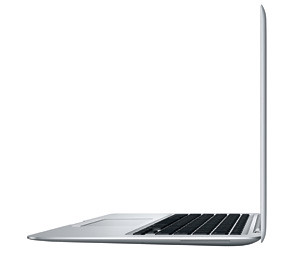
To begin with what exactly is the MacBook Air?
It’s Apple’s entry into the lightweight portable computer market known as the subnotebook
The 10 characteristics
- Cost
- The base 1.6GHz model costs $1,799, $300 more than the top-of-the-line 2.2 GHz black MacBook, and $200 less than the low-end 2.2GHz 15-inch MacBook Pro
- Weight
- 3 pounds
- MacBook weighs 5 pounds, the 15-inch MacBook Pro, 5.4 pounds, and the 17-inch MacBook Pro, 6.8 pounds.
- Size
- The wedge-shaped laptop actually tapers from 0.76 inches high at the back to 0.16 inches at the front. In terms of its width and depth, it’s actually almost identical to the MacBook, at 12.8 inches wide and 8.9 inches deep.
- Trackpad
- The trackpad is capable of recognizing multi-touch gestures, similar to using an iPhone or iPod touch.
- Ethernet
- MacBook Air doesn’t have it. If you need Ethernet connectivity, Apple will sell a $29 10/100BASE-T USB Ethernet adapter that connects to the USB port.
- Keyboard
- It’s a full-sized MacBook-style keyboard, complete with square keycaps, in black. The keyboard is backlit, similar to those on the MacBook Pros
- Display
- The MacBook Air also has a 13.3-inch widescreen display with 1,280-by-800-pixels resolution. It also includes a built-in iSight camera
- Micro DVI ports
- Though the MacBook Air uses the smaller micro-DVI port rather than the MacBook’s built-in mini-DVI, the computer otherwise has the same video capabilities as the MacBook: it will drive external displays as large as 1,920-by-1,200 pixels, including Apple’s 23-inch Cinema Display, and can use that display as either an additional display or as a mirror of the laptop screen’s contents. The MacBook Air also uses the same Intel GMA X3100 integrated graphics processor with 144MB of shared memory as the MacBook.
- Optical drive
- Apple’s guess is that you’ll have another computer in your house or office with a built-in optical drive. That’s why it’s included the new Remote Disc software with MacBook Air.After you’ve installed Remote Disc on any Mac or PC with a CD or DVD drive, the MacBook Air can connect to that computer and read the disc in the drive as if it were its own. When you click on the new Remote Disc item in the Finder’s sidebar on the MacBook Air, you’ll see a list of all the computers on your local Bonjour network that have Remote Disc installed. Click on a computer and one of two things will happen—either you’ll just take control of the drive, or (optionally) the user of the other computer will be prompted to allow you to take control.
If your MacBook Air has a catastrophic problem and you need to reinstall Mac OS X, you can even do that via a Remote Disc. As for watching movies, Apple suggests you use an iPod, iPhone, or iTunes to watch movies instead of playing a DVD. - Internet connectivity
- The MacBook Air includes 802.11n wireless networking, as well as Bluetooth 2.1 + EDR for mice and the like.
0
comments
Labels:
Apple,
Laptops,
MacBook Air,
microsoft,
Notebooks,
Subnotebooks
Microsoft opens up to outsiders
Friday, January 18, 2008 |
Microsoft has hired another outsider to fill a key executive role--one more sign that the software giant's promote-from-within culture is fading.
The company said Thursday that Disney and General Motors (nyse: GM - news - people ) veteran Tony Scott will become its new chief information officer starting next month. The announcement comes just a week after Microsoft (nasdaq: MSFT - news - people ) tapped Stephen Elop, chief operating officer of Juniper Networks (nasdaq: JNPR - news - people ), to replace company veteran Jeff Raikes in the high-profile job of business division president.
For years, Microsoft prided itself on promoting from within. But industry experts say that the pace of innovation and competition in recent years has forced the company to bring in outside talent with fresh ideas. Last year, for instance, John Schappert, executive vice president of Electronics Arts, was named corporate vice president of Xbox Live, Microsoft's interactive entertainment division. In 2006, Microsoft hired Ask.com Chief Executive Steve Berkowitz to head its online services. And in 2005, Microsoft acquired Groove Networks and named its founder, Ray Ozzie, as its chief technical officer.
Indeed, half of the top 10 slots are now held by people who have worked at the Redmond, Wash., software giant for fewer than four years. Strict software experience is no longer required: These new Microsoft executives hail from a wide range of industries including retail, technology and entertainment.
A Microsoft spokesman said the company is "committed to both developing internal talent as well as recruiting great talent from outside the company." Even so, the list of outside recruits goes on and on.
n his role as chief information officer, Scott, 56, will manage the Redmond, Wash.-based company’s global information technology organization, which oversees worldwide sales, marketing, services businesses, enterprise systems and business applications.
Microsoft said Scott has more than 25 years of experience running global information technology operations for major corporations. Most recently, he was senior vice president and chief information officer at Disney, where he was the first chief information officer to manage companywide IT. Prior to Disney, Scott was chief technology officer at GM and vice president of operations at Bristol-Meyers Squibb. At Microsoft, he will report to Chief Operating Officer Kevin Turner.
Tony Scott replaces former chief information officer Stuart Scott, who was ousted several months ago for "violation of company policies." Microsoft wouldn't provide details about what policies were violated or how. The two men are not related, but Stuart Scott was also an outsider, joining Microsoft in 2003 from General Electric (nyse: GE - news - people ).
Rob Helm, director of research at Directions on Microsoft, says the chief information officer position is critical at Microsoft. Unlike other companies, Microsoft's CIO deals with both internal and external issues. At Microsoft, "the CIO is the first reference for customers," says Helm. "He has to go out and convince them Microsoft products are ready to use."
On paper, Scott looks like he has the right experience, Helm says. "He has done a lot of public speaking," he says. "A good public face is important for the Microsoft CIO."
Helm also said Scott appears technically proficient. At GM, he consolidated SAP (nyse: SAP - news - people ) systems, which should give him more clout with customers "Microsoft has wanted to be viewed like IBM--a strategic enterprise vendor," Helm says. "Customers rely on overall high-level guidance, not just 'sell us your parts and go away.' "
Microsoft wouldn't disclose details about the chief information officer search. Helm says GM is a very large Microsoft customer, and Scott is likely to be well-known to other Microsoft senior managers
Source: forbes
0
comments
Labels:
microsoft