 RSS Feed
Apple today announced that under certain conditions the new ultracompact Apple USB power adapter’s metal prongs can break off and remain in a power outlet, creating the risk of electric shock.
Apple has received reports of detached prongs involving a very small percentage of the adapters sold, but no injuries have been reported.
Customer safety is always Apple’s top priority so it has voluntarily decided to exchange every ultracompact power adapter for a new redesigned adapter, free of charge. For more details on the exchange program please Click here.
www.apple.com/support/usbadapter/exchangeprogram
Showing posts with label Apple. Show all posts
Showing posts with label Apple. Show all posts
Apple Announces Ultracompact USB Adapter Exchange Program
 Thursday, September 25, 2008 |
 0
comments
0
comments
 Labels:
Apple,
News
Labels:
Apple,
News
Misleading iphone ad banned
Wednesday, August 27, 2008 |
The U.K.'s Advertising Standards Authority has banned an iPhone ad because the agency said the claim that the handset can access "all parts of the Internet" is misleading due to the lack of Flash and Java support.
The commercial in question shows a person using the touch screen to flick through various Web pages.
"You never know which part of the Internet you'll need," A voiceover in the ad said. "The 'do you need sun cream' part? The 'what's the quickest way to the airport' part? The 'what about an ocean view room' part? Or the 'can you really afford this' part? Which is why all the parts of the Internet are on the iPhone."
Two viewers complained that the ads were misleading because the handset does not have Flash or Java support, which are integral to popular sites like YouTube.
In response, Apple said the ad was meant to highlight the difference between surfing the Web on an iPhone and on a normal mobile phone, which often restricts users to simplified, WAP-versions of Web sites. The phrase "all parts of the Internet" referred to site availability, not every aspect of functionality on these sites, Apple said.
Source: Information Week
0
comments
Labels:
Apple,
iphone,
News
Iphone 3G troubled by network
Monday, August 25, 2008 |
Commissioned by Wired nearly two weeks ago, the study sought the voluntary participation of iPhone 3G users around the world to test their iPhone's network connection at TestMyiPhone.com and submit the honest results of those speed tests to an interactive Zeemap.
After analyzing over 2,600 submissions (and more than a thousand others that were discarded because they were either blank or included an incomplete set of results), Wired concluded that the widely reported iPhone data speed problems "have more to do with carriers' networks than with Apple's handsets."
Overall, the user-submitted results show that 3G networks are performing faster than EDGE around the world -- as would be expected. The best case scenarios reported 3G performance that was seven times that of EDGE, while other scenarios had 3G performing just as slowly as EDGE. In the worse case scenarios, users reported that they were unable to connect to 3G at all. Read
source: www.appleinsider.com
0
comments
Labels:
Apple,
iphone,
Technology,
Telecommunications
Apple Iphone at $199
Wednesday, June 11, 2008 |
Computer world
One of the side effects of the arrival of Apple Inc.'s iPhone 3G will be a flood of original iPhones on the used market, according to a company that specializes in refurbishing Apple's electronics. And that's going to push down prices of the older phones.
The move also spells an end to most of the "gray" market in unlocked, or hacked, iPhones, argued Aaron Vronko, service manager at Rapid Repair, a Kalamazoo, Mich.-based company that buys and repairs used iPods, iPhones and Zunes.
"There's going to be a large push on the used market," he said. "A lot of the early adopters for the original iPhone are going to be the same people who want to be the early adopters for the second generation." And many of those people will want to fund part of their iPhone 3G purchase by selling their now-unnecessary iPhones.
"Even if you only get $50, that brings down the price of a new phone to $150 or so," Vronko said.
The price for a fully-functional used iPhone will fall from last week's price of around $200 to the $75-to-$90 range, Vronko said. Apple CEO Steve Jobs unveiled the new iPhone 3G on Monday and announced it would go on sale in 22 countries, including the U.S., on July 11.
more...
Iphone @ $199
Apple Inc. CEO Steve Jobs kicked off his company's developers conference today by unveiling a new iPhone that connects to faster 3G-based networks, includes built-in GPS and costs half as much as the current lowest-priced model.
The new iPhones -- $199 for one with 8GB of storage space, $299 for 16GB of storage -- will be available starting Friday, July 11 in 22 countries, including Canada, Germany, Japan, the U.K. and the U.S. By the end of the year, said Jobs at the Worldwide Developers Conference (WWDC) in San Francisco, Apple expects to be selling the iPhone in 70 countries.
In the U.S., the new iPhone will be sold at Apple-owned retail stores as well as the stores operated by its network partner, AT&T. As of Monday, the Apple online store was not taking pre-orders.
"We've learned so much with the first iPhone," said Jobs near the end of the 105-min. keynote. "We've taken everything we've learned and more and created the iPhone 3G."
He called out a number of things that Apple needed to add to the iPhone to take it to the next sales level, including 3G, enterprise support, wider availability, third-party applications and a lower price. "Everyone wants an iPhone, but we need to make it more affordable," he said.
At the new price points, the future iPhone will cost less than a comparably-equipped iPod touch, which currently sells for $299 for an 8GB device, a fact not lost on Ezra Gottheil, an analyst with Technology Business Research. "There's nothing to be lost buying an iPhone then, is there?" Gottheil said, who added that he expects Apple to revamp or re-price the iPod touch line soon.
more...
0
comments
Labels:
Apple,
iphone
Microsoft urges users to stop using safari on windows
Sunday, June 1, 2008 |
Microsoft security advisory: Blended Threat from Combined Attack Using Apple’s Safari on the Windows Platform
Microsoft
Microsoft on May 30, 2008 issued an advisory that warned windows users to not use apple's safari web browser until a patch is available that could stop the attackers to hack computers.
Microsoft Security Response Center (MSRC) issued a security advisory, which it called a "blended threat".
It is caused by a combination of a bug in Apple's Safari Web browser and the vulnerability in the way the Windows XP and Vista handle executable (exe) files on the desktop. This allows the remote execution of malicious code on all supported Windows XP and Vista when the Safari web browser for Windows is installed. This bug was disclosed 2 weeks ago by a researcher Nitesh Dhanjani.
Safari lacks an option to require a user's permission to download a file. Attackers, could populate a malicious site with a code that Safari that would automatically download to the desktop, which is the default location.
Nitesh Dhanjani
A combination of the default download location in Safari and how the Windows desktop handles executables creates a blended threat in which files may be downloaded to a user’s machine without prompting, allowing them to be executed. Safari is available as a stand-alone install or through the Apple Software Update application.
An attacker could trick users into visiting a specially crafted Web site that could download content to a user’s machine and execute the content locally using the same permissions as the logged-on user.
Microsoft
0
comments
Labels:
Apple,
Hackers,
Hacking,
Industry news,
microsoft,
News,
Security,
Web,
Windows
Apple Ink on tattoos
Sunday, March 23, 2008 |

Apple's ink has found its way on tattoos. The world famous tattoo artists (Guy Aitchison and Michele Wortman) are well known for their innovative Ink.
To create a new design he takes digital photos of the body parts and imports it to photoshop on his mac book pro. He then sketches out the overall flow of the piece.
He does a plenty of analog projects(painting and drawing) but at sometime it gets funneled through the digital world.
With tools such as apple's safari browser, both artists have enough options to get their designs right.
It can surely be said that when it comes to design, apple generally gets things right.
0
comments
Labels:
Apple
Dell is developing windows based mobile
Thursday, March 20, 2008 |
A recent report from Digitimes suggests that Dell is working with Foxconn Group to develop Windows Mobile-based handheld devices. Neither Dell nor Foxconn responded to requests for comment.
The development of smartphones, however, seems like a logical step for Dell to expand its presence in the mobile market, said Neil Mawston, director of wireless device strategies at analysis firm Strategy Analytics.
However, Dell ; will need an iPhone killer to really make a dent in the market, analysts said.
Dell competitors Apple, HP and Toshiba are already present in mobile computing with smartphones and PDAs (personal digital assistants), and the market is just too big for Dell to ignore, Mawston said.
byAgam Shah, IDG News Service
PC World
0
comments
Labels:
Apple,
Dell,
INTERNET
Senior editor looses his MacBook air
Thursday, March 13, 2008 |

I read a blog post by steven levy, one of the senior editors of The washington post and he had lost his MacBook Air. The thin slidy laptop which is smaller than small was lost in thin air of his apartment. The fact that the delicate small chap(teh Air) of apple is small,it can easily slide into small crevices. The Air is a fabulous thing and the fact the Air became so thin was that it was kept on an abstemious diet.With a few parts chopped off, the apple guys managed to create a notebook that deserved a worldwide attention. The MacBook Air got an ideal start but it had to be sold. Buying the notebook meant that you were buying a notebook that could fit in your pocket(not in terms of money,but size). Currently the PDA and the mobile phones are the gadgets that fit easily in our pockets and they get slided away with the same ease by thieves too.This could have happened with steven possibly. He also suspected that it could have gone away with the thick trash of old newspapers and magazines into the recycling bin.This incident shouldn't really affect the sales of the MacBook Air which has been specifically built for those who travel frequently but it surely highlights the fact that human nature and habits could play a vital role in the success of the Mac commercially. You wouldn't like to buy a notebook which get lost or stolen easily.
Read the blog of steven levy
Also try : MacBook Air - Pros n Cons
0
comments
Labels:
Apple,
Laptops,
MacBook Air,
Notebooks
The iphone SDK notes
Sunday, March 9, 2008 |
Introduction
Apple's SDK blows open the process of creating native apps for the iPhone by letting most any would-be coder get started.
Developers
According to iPhoneDevCamp co-founder Raven Zachary, "The fear [in the development community] today was that Apple was going to constrain the ability for third-party developers to distribute apps, in the same way they did with the iPod games market." Developers can sign up and download the SDK for free, which in turn allows Apple to reach out to a wider cross-section of would-be coders than they might have otherwise.reaction has been almost universally positive to Apple's SDK plans.
Developers had feared worse outcomes, such as having to submit their source code to Apple, and seemed willing to let Apple take a piece of their revenue and be the exclusive distributor for iPhone applications in exchange for getting a crack at the technology.
you're not going to be able to use anything other than Apple's official APIs (application programming interfaces), notes Ken Aspeslagh (via Daring Fireball). This isn't much of a shock, but it means that a lot of techniques learned developing unofficial iPhone apps will probably not work with the official SDK.
Multiprocessing problem
Apple's SDK documentation (embedded in the TechCrunch post) points out that the iPhone can only display a single application screen at a time, and urges prospective developers to spend a lot of time designing an application that can handle quick stops and starts. "In other words, users should not feel that leaving your iPhone application and returning to it later is any more difficult than switching among applications on a computer."
iPhone might not be able to support the processing demands required by multitasking, but plenty of other phones seem to be able to juggle more than one application at a time. I wonder whether future Apple-developed iPhone applications--like, say an iPhone version of iChat--will be subject to the same restrictions.
Intel's upcoming mobile processors
One interesting passage in the iPhone SDK documentation should give Intel something to think about. "If you have an existing computer application, don't port it to iPhone OS. People use iPhone OS-based devices very differently than they use desktop and laptop computers, and they have very different expectations for the user experience."
Intel has been pitching its upcoming lineup of x86-based Silverthorne and Moorestown processors as ideal for the next generation of mobile devices, because they can run any type of software that you can currently run on a PC. The chipmaker has a point in that if you're already familiar with x86 development process, you might find a Silverthorne chip an easier target than an ARM-based chip. But all those Mac and PC software developers will have to bring a totally different mindset to mobile development anyway. Those developers who have been doing this type of development already could have a substantial edge.

Sources
The iPhone SDK: The day after
Apple's iPhone SDK Strategy Both Promotes and Stifles Innovation
0
comments
Labels:
Apple,
iphone,
Software
Tech attack: Japanese engineers trash MacBook Air
Sunday, February 24, 2008 |

Japanese engineers were quick to pour scorn on the MacBook Air. This critique comes courtesy of Nikkei Electronics, a major Japanese electronics monthly, which did a teardown of the Air.
Here's the seeming challenge: The Japanese PC industry must come up with a reason why their own PC suppliers--NEC, Toshiba, Sony, Fujitsu--don't have a riveting 0.75-inch-thin notebook design on the market in the U.S. The answer, for them, is simple: a Japanese company would never approve of the design.
MacBook Air(Credit: Apple)
(Actually Mitsubishi did design an Air-thin notebook called the Pedion back in 1997, but the shallow keyboard was almost unusable--and no one bought it. IBM Japan and Sharp, among others, have made ultrathin notebooks but none that wowed consumers like the Air.)
So, let's do a teardown of the Nikkei Electronics teardown piece.
Though the English is here, let me dissect some of the original Japanese (I worked, reluctantly, as a part-time translator at a Japanese communications company in Tokyo for close to four years.) The article headline uses the phrase "muda nashi" to refer to the exterior, and "muda darake" to refer to the inside of the Air. In short, the exterior of the Air is clean, with no waste (muda nashi), but the internals are a complete waste (muda darake). My (not literal) translation: the Air looks good on the outside but is a piece of junk on the inside. This criticism seems beyond constructive to me and borders on spite. (I will explain why below.)
Let's look at another part. "Sugoi to kanjiru tokoro wa hitotsu mo nai." Translation: "There is not one thing (about the Air) that impresses." Then the engineer adds: "If it was us, we could make it cheaper." This sentiment (that the Air doesn't have even one redeeming technological quality) shows that the person making the statement almost holds an animus toward the Air.
My question. If this guy's company (NEC, Toshiba?) could make a cheaper, better Air, why hasn't it done it?
Other alleged shortcomings: an engineer asserts that the keyboard has too many screws and alludes to possibly less-than-perfect hinges. The team also hazards a guess that the Air was made by HonHai Precision Industry of Taiwan.
That's not to say the article is all gratuitous criticism. An engineer speculates that there wasn't enough feedback from the factory (or factories) that made the Air. And, along these lines, another engineer said the design indicates that Apple's main focus is on software and user interfaces, not the particulars of system manufacturing. These may be valid observations. By definition, any PC company that uses a contract manufacturer is removed from the manufacturing process. Certainly more than, let's say, Compaq was in 1994 when it made its PCs within the same building complex in Houston that housed its executives. But all PC makers today outsource manufacturing, including the Japanese.
That said, the problem with the Nikkei Electronics article is that the engineers are from major Japanese PC makers (though their affiliations are never revealed). It seems clear that at least some of the team may have a vested interest in poking holes in the Air's design because they work for companies that directly compete with Apple and are likely archrivals of Apple. Imagine asking a team of AMD engineers about an Intel chip design. The response would be nothing short of libel.
Also, the Japanese press never targets a domestic manufacturer in this way. In other words, it is not politically correct (in Japan) to tear down a device from Sony or Fujitsu or Sharp and subject it to open disdain (though I'm sure this is done internally at Japanese companies). This kind of hypercritical analysis is reserved for foreign manufacturers: Amercian, Korean, Chinese, and others. The upshot: this assessment by the Nikkei team may contain some valid points, but the premise of the article seems bogus
Author's note: Though I translated extensively (as part of my job) in Japan for a number of years, in this case, I have consulted with native Japanese speakers too. In short, the dynamics of pairing "muda nashi" with "muda darake" changes the combined meaning. Muda darake alone means "a lot of unnecessary waste" or an "excess" of waste. But, in my opinion, the implication is more harsh, i.e., the outside is nice but the inside is junky.
source:blogs.cnet.com
0
comments
Labels:
Apple,
japan,
MacBook Air,
nikkei,
Notebooks,
Technology
The 10 characteristics of MacBook Air
Saturday, January 19, 2008 |
To begin with what exactly is the MacBook Air?
It’s Apple’s entry into the lightweight portable computer market known as the subnotebook
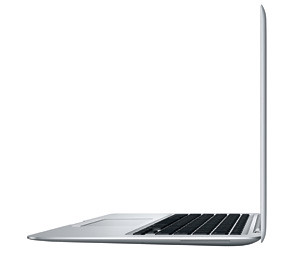
The 10 characteristics
- Cost
- The base 1.6GHz model costs $1,799, $300 more than the top-of-the-line 2.2 GHz black MacBook, and $200 less than the low-end 2.2GHz 15-inch MacBook Pro
- Weight
- 3 pounds
- MacBook weighs 5 pounds, the 15-inch MacBook Pro, 5.4 pounds, and the 17-inch MacBook Pro, 6.8 pounds.
- Size
- The wedge-shaped laptop actually tapers from 0.76 inches high at the back to 0.16 inches at the front. In terms of its width and depth, it’s actually almost identical to the MacBook, at 12.8 inches wide and 8.9 inches deep.
- Trackpad
- The trackpad is capable of recognizing multi-touch gestures, similar to using an iPhone or iPod touch.
- Ethernet
- MacBook Air doesn’t have it. If you need Ethernet connectivity, Apple will sell a $29 10/100BASE-T USB Ethernet adapter that connects to the USB port.
- Keyboard
- It’s a full-sized MacBook-style keyboard, complete with square keycaps, in black. The keyboard is backlit, similar to those on the MacBook Pros
- Display
- The MacBook Air also has a 13.3-inch widescreen display with 1,280-by-800-pixels resolution. It also includes a built-in iSight camera
- Micro DVI ports
- Though the MacBook Air uses the smaller micro-DVI port rather than the MacBook’s built-in mini-DVI, the computer otherwise has the same video capabilities as the MacBook: it will drive external displays as large as 1,920-by-1,200 pixels, including Apple’s 23-inch Cinema Display, and can use that display as either an additional display or as a mirror of the laptop screen’s contents. The MacBook Air also uses the same Intel GMA X3100 integrated graphics processor with 144MB of shared memory as the MacBook.
- Optical drive
- Apple’s guess is that you’ll have another computer in your house or office with a built-in optical drive. That’s why it’s included the new Remote Disc software with MacBook Air.After you’ve installed Remote Disc on any Mac or PC with a CD or DVD drive, the MacBook Air can connect to that computer and read the disc in the drive as if it were its own. When you click on the new Remote Disc item in the Finder’s sidebar on the MacBook Air, you’ll see a list of all the computers on your local Bonjour network that have Remote Disc installed. Click on a computer and one of two things will happen—either you’ll just take control of the drive, or (optionally) the user of the other computer will be prompted to allow you to take control.
If your MacBook Air has a catastrophic problem and you need to reinstall Mac OS X, you can even do that via a Remote Disc. As for watching movies, Apple suggests you use an iPod, iPhone, or iTunes to watch movies instead of playing a DVD. - Internet connectivity
- The MacBook Air includes 802.11n wireless networking, as well as Bluetooth 2.1 + EDR for mice and the like.
0
comments
Labels:
Apple,
Laptops,
MacBook Air,
microsoft,
Notebooks,
Subnotebooks
Subscribe to:
Posts (Atom)